
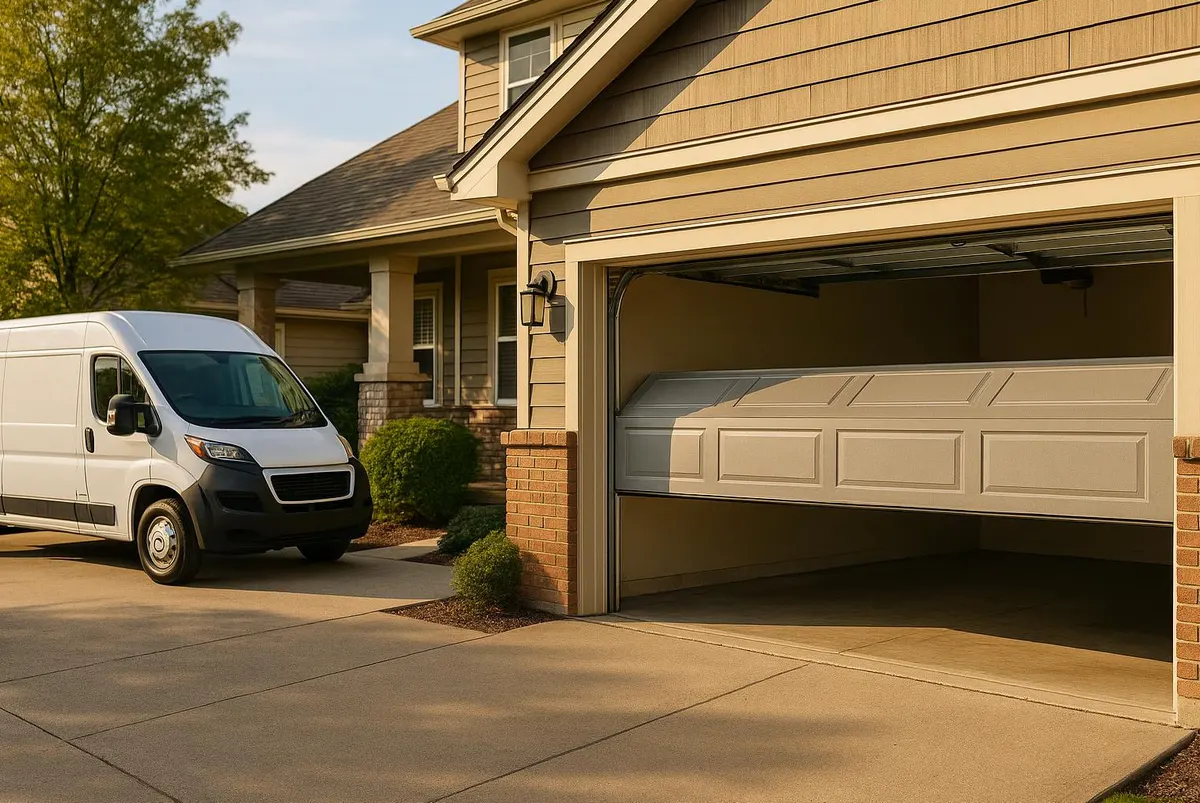
The One-Sentence Rule, Plus the Exceptions
Lubricate the moving metal parts of your garage door twice a year with a silicone or lithium-based spray, and leave the rubber seals, nylon rollers, and opener's plastic gears alone. That's the baseline for most homes in Astatula, Tavares, and Eustis. The exceptions: if your household runs two or three cars through that door daily, bump it to every three to four months. If you just came through a stretch of heavy storms with wind-driven rain getting into the garage, check the hardware sooner rather than waiting for the calendar. And if you see rust forming on the springs themselves, that's not a lubrication job at all — that's a call to a technician, which we'll get to below.
Why This Matters More Here Than in Drier Climates
Lake County's humidity doesn't just make the air sticky. It gets into every metal joint on your garage door and speeds up corrosion in ways homeowners in drier states never have to think about. Add afternoon downpours and the tail end of hurricane season, and you've got hinges and rollers that are exposed to moisture far more often than the manufacturer's spec sheet assumes. Late fall, once the storm pattern settles down, is actually a smart time to do a full lubrication pass — it's a good reset after months of rain and wind-load stress on the door.
Tools and Supplies You'll Need
- A silicone-based garage door lubricant spray (sold specifically for garage doors)
- White lithium grease in a tube or spray can, for springs and the opener's drive screw or chain
- A clean, lint-free rag
- A soft-bristle brush or old toothbrush for cleaning tracks and hinge pins
- A step stool or ladder tall enough to reach the top rollers and springs safely
- Safety glasses
Products to Avoid
- WD-40: It's a solvent and light rust penetrant, not a lubricant. It will clean off old grime, but it evaporates quickly and leaves parts drier than before, which means more friction within weeks.
- Motor oil or household 3-in-1 oil: Too thin for the weight these parts carry; it drips, attracts dust and pollen, and gums up over time in humid air.
- Grease on nylon rollers: Most newer garage doors use nylon rollers with sealed bearings that need no lubrication at all. Spraying them just builds up a grime collar that attracts dirt.
- Any petroleum-based product on rubber seals or weatherstripping: It breaks down the rubber and accelerates cracking, which is the last thing you want with Florida sun and swelling humidity already working against the seal.
Step-by-Step: Lubricating Your Garage Door
- Disconnect the opener and close the door manually first. Pull the red release cord so you can move the door by hand and work safely without the motor engaging mid-task.
- Inspect before you spray. Look at hinges, rollers, springs, and the track for rust, bent metal, fraying cable, or visible wear. Note anything that looks off-track or stressed — that's not a lubrication fix.
- Wipe down the tracks with a dry rag. Tracks should be clean, not lubricated. Any grease here just collects dust and grit, which makes rollers bind instead of glide.
- Spray the hinges. A light coat of silicone lubricant on each hinge pin, including the ones at the top near the header, covers the pivot points that take the most repetitive stress.
- Lubricate the rollers, but only if they're steel with exposed bearings. A quick spray on the bearing, not the wheel surface, is enough. Skip this step entirely for sealed nylon rollers.
- Apply white lithium grease sparingly to the springs. This reduces metal-on-metal friction and helps slow surface rust, which is common in our humidity. Don't overdo it — a thin film is plenty, and never adjust spring tension yourself.
- Lubricate the opener's drive mechanism. If you have a chain-drive opener, a light coat of lithium grease on the chain helps. Screw-drive openers need a specific opener lubricant on the threaded rod; check your manual.
- Wipe off excess lubricant everywhere you applied it. Excess product just becomes a magnet for dust, pollen, and the fine grit that blows around during dry, windy stretches.
- Reconnect the opener and run the door up and down two or three times. Listen for grinding, watch for hesitation, and confirm it moves smoothly along the full track.
What's Safe for a Homeowner vs. What Needs a Technician
Everything above — hinges, steel roller bearings, light coating on springs, opener chain or screw — is reasonable for a homeowner with basic tools and a step stool. What's not in scope for a DIY lubrication job:
- Torsion spring replacement or tension adjustment. These springs store enough force to cause serious injury if handled incorrectly.
- Cable work of any kind. Frayed or loose cables are under constant tension and should only be handled by someone trained for it.
- A door that's off its track. Lubricant won't fix misalignment, and forcing a door that's off-track can bend the frame or damage the opener.
- Persistent grinding or binding after a full lubrication pass. That usually points to a worn roller, bent track, or a spring that's lost tension — all things that need a trained eye.
When to Call Precision Garage Door of Astatula
If you've lubricated everything correctly and the door still sticks, grinds, or sags to one side, it's time to call in a technician rather than keep spraying more product at the problem. Our Garage Door Maintenance & Tune-Up service covers a full inspection of springs, cables, and rollers, along with professional-grade lubrication of every moving part, so you're not guessing which product belongs where. If we find worn rollers or fraying cable during that visit, our Cable & Roller Replacement service handles it the same day in most cases.
If you're in Astatula, Tavares, Leesburg, Eustis, Mount Dora, Howey-in-the-Hills, Minneola, or Clermont and your garage door needs more than a can of lubricant, give Precision Garage Door of Astatula a call. We'll diagnose it fast and fix it right the first time.