
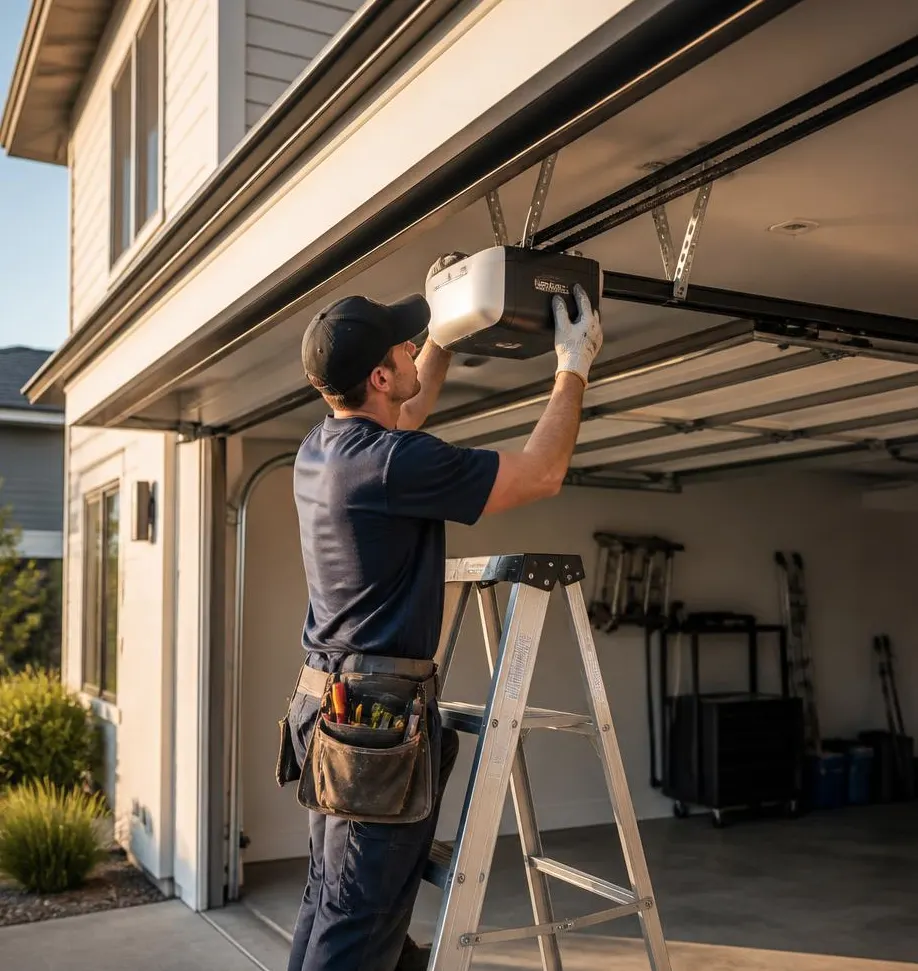
What a technician usually walks into
It typically goes like this: one spouse has already picked out a new garage door online, the other is holding a phone with the HOA handbook open, and both are looking at the technician like he's the tiebreaker. One says, "It's just a garage door, we don't need permission for that." The other says, "We absolutely do, remember what happened to the Johnsons' fence." The truth is they're both a little right, because there are actually three separate approvals in play, and people tend to collapse them into one argument.
Three different hoops, not one
When you replace a garage door in this part of Florida, you may be dealing with a building permit, a wind-load code requirement, and an HOA approval, all at the same time. They sound like the same red tape, but they come from different places and serve different purposes.
The building permit
A permit is a local government check that the work meets current building code. For a straightforward like-for-like door swap, many homeowners are surprised whether a permit is even required; for a full replacement that changes the opening, the track system, or the door's wind rating, it's far more likely to come up. The cleanest way to find out is to ask whoever is doing the installation whether this specific job needs one pulled before work starts, rather than guessing based on what a neighbor did last year.
Wind-load code
This is the one that isn't optional or negotiable, and it exists because of exactly the weather this area deals with every summer and fall. A garage door is one of the largest openings in a house, and during a storm it's also one of the weakest points. If wind gets behind it and the door fails, pressure can build inside the garage and cause much more serious structural damage to the roof and walls. That's why doors sold and installed here are built to resist wind pressure, not just built to look right. If you're comparing a door online to one a local installer recommends, the price difference is often the wind-rated hardware and reinforced panels, not just the color or window style.
HOA approval
This one has nothing to do with safety and everything to do with appearance. Associations typically care about color, panel style, window inserts, and sometimes the material, because they're trying to keep the neighborhood looking consistent. An HOA can absolutely require you to submit a request before installation, but passing that review doesn't mean the door meets code, and meeting code doesn't mean the HOA will approve the look. They're judged by two completely different people for two completely different reasons.
Why this matters more here than in a lot of other places
Between the humidity, the afternoon storms, and the stretch of the year when wind is a real concern, garage doors here work harder than they do in drier climates. Moisture causes swelling in wood-composite panels and rust on hardware that isn't rated for it, and a door that technically still opens and closes can still be a liability in a storm if it wasn't installed with the right wind-load components. This is also why a door that passed inspection ten or fifteen years ago may not meet what's expected today; codes get updated as building science catches up with real storm damage, so "it was fine when we built the house" isn't the same as "it's fine now."
What actually happens if you skip a step
- Skip the permit: you may run into problems later when selling the house, since inspections can flag unpermitted structural work.
- Skip wind-load compliance: you risk real storm damage, and some insurance claims can be denied or reduced if the installed door didn't meet the required rating.
- Skip HOA approval: you may be asked to repaint, swap panels, or in some cases redo the installation entirely, which costs more than getting the sign-off up front.
None of these are things you want to discover after the door is already hanging in the opening.
How to settle the argument, practically
- Pull out the HOA handbook or contact the association directly and ask specifically about garage door color, style, and window inserts.
- Ask your installer, before any contract is signed, whether this particular replacement requires a permit and whether the door being quoted meets current wind-load requirements for this area.
- Keep documentation from both, the HOA approval and the installation paperwork, somewhere you can find it if you ever sell the house or file an insurance claim.
Do those three things and the debate over who was "more right" becomes irrelevant, because you'll have answers instead of guesses.
When to call Precision Garage Door of Astatula
If you're past the research stage and ready to move, this is where it helps to have someone who installs doors in this climate every week. Our Garage Door Installation & Replacement service includes walking you through which door options meet current wind-load expectations for this area, so you're not stuck choosing between a style you like and a door that holds up in a storm. If your current door is still functional but showing rust, swelling, or wear from the humidity, our Garage Door Maintenance & Tune-Up service can extend its life until you're ready for a full replacement.
If you're in Astatula, Tavares, Leesburg, Eustis, Mount Dora, Howey-in-the-Hills, or Clermont and you'd rather get a straight answer than keep guessing, call Precision Garage Door of Astatula and we'll walk the job with you before anything gets ordered.